When parents search for karate in Coral Springs, they are often looking for more than karate itself. They want an activity that helps a child listen, handle frustration, and feel capable around other children. Martial arts is a familiar answer, but the different styles can make the choice confusing.
Karate and Brazilian Jiu Jitsu can both be worthwhile, yet they organize practice differently. Karate commonly emphasizes striking, stances, and forms. BJJ commonly emphasizes grappling, position, and partner problem-solving. The quality of the instructor and the fit of the class matter at least as much as the style name.
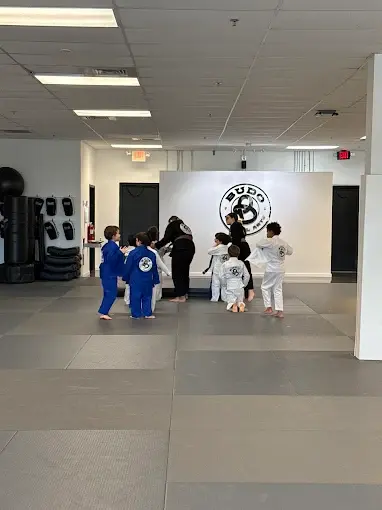
This comparison is for families choosing a first program, not for declaring one martial art superior. Budo Martial Arts is a BJJ and Muay Thai academy with age-based kids programs in Coconut Creek. It serves nearby Coral Springs families, but it should not be mistaken for a traditional karate school located in Coral Springs.
1. Compare What Children Actually Do in Class
Karate is a broad family of traditions, so two karate schools may teach quite differently. A class can include basic punches and kicks, movement patterns called forms or kata, pad work, and controlled sparring. Some schools place more emphasis on tradition and formal performance, while others prioritize sport or practical applications.
Karate often starts with individual movement
A child may learn a stance, practice a combination, and repeat it with the group before working with a partner. That structure can appeal to children who enjoy clear sequences and a little space around them. However, do not assume a karate class avoids contact; ask about its actual sparring policy and protective equipment.
BJJ often starts with position and cooperation
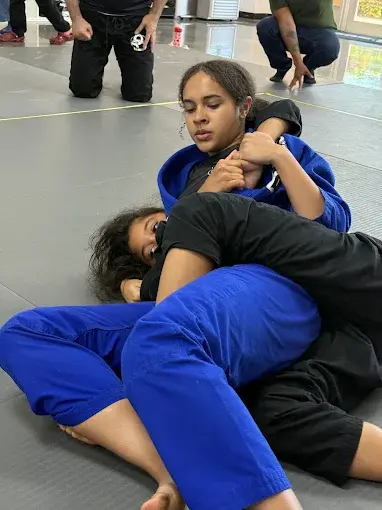
In BJJ, a child may practice moving on the ground, maintaining balance, or escaping a controlled position with a partner. Learning requires attention to another person’s movement and clear stopping signals. A child who enjoys interactive puzzles may find that engaging, while one uncomfortable with close contact may need a patient introduction.
- Karate: often includes striking technique, stances, forms, and partner applications.
- BJJ: often includes grappling movement, positional control, escapes, and partner drills.
- Both: can teach attention, respectful practice, coordination, and persistence.
- Neither: guarantees confidence or safety simply because of the style name.
2. Start with Your Child’s Needs, Not the Belt System
Write down the problem you are trying to solve before visiting a school. Is your child nervous in unfamiliar groups? Do they give up when a task becomes difficult? Are they asking for a sport of their own? A specific starting point makes it easier to observe whether the class is helpful.
A hypothetical first-week example
Picture a six-year-old who quits a game after losing once. In either karate or BJJ, a patient coach might give the child one achievable task, let them attempt it, and help them try again after a mistake. The important event is the second attempt, not a speech about being confident.
That is an illustrative scenario, not a testimonial or a promised result. Families should look for those small moments in the real class they attend. How does the instructor respond to tears, distraction, or an incorrect movement? Respectful, specific feedback gives you better evidence than general claims about character development.
A belt system can provide milestones, but it should not be the only measure of progress. Notice whether your child understands directions, works kindly with a partner, and can discuss something they practiced. Those observations are useful regardless of which style your family ultimately chooses.
3. Ask Better Questions About Bullying and Safety
Parents understandably want children to feel less vulnerable. Be cautious of any school that promises to make a child bully-proof or treats every conflict as a physical confrontation. Responsible self-defense begins with awareness, clear words, distance when possible, and help from trusted adults. Physical skills do not replace a school’s reporting and safeguarding process.
Different tools, the same need for boundaries
Karate can introduce striking mechanics and distance management. BJJ can introduce grappling position and escapes from close contact. Whether a technique is useful depends on the situation and the training, and either style can be misused. Children need to understand that class practice is not permission to fight at school.
Ask the instructor how children are taught to stop and how the staff handle unequal size, experience, or intensity. In BJJ, partners must respect taps immediately; in striking practice, equipment and contact rules should be explicit. Neither type of training is risk-free, so listen for practical precautions rather than absolute reassurances.
- What contact is appropriate for this age group?
- Which techniques are restricted, and who supervises partner work?
- How do students report discomfort or ask for a different partner?
- What do you tell children about using techniques outside class?
- How do parents learn about an incident or injury?
4. Match the Class to the Age and Personality
A three-year-old and a twelve-year-old should not be expected to learn in the same way. Younger students usually need simpler directions, playful repetition, and support with taking turns. Older children can handle more detailed explanations and greater responsibility. Ask whether the school’s age grouping reflects those differences.
Budo’s age-based starting points
- Tiny Ninjas: ages 3 to 4.
- Lil Ninjas: ages 5 to 7.
- Jr. Warriors: ages 8 to 12.
- Teen and adult BJJ: ages 13 and older.
A shy child does not automatically need BJJ, and a high-energy child does not automatically need karate. Personality labels are only clues. Watch the actual response to the instructor, the noise level, the partner work, and the transitions between activities. A thoughtful introduction can make a bigger difference than the label on the building.
If your child has sensory needs, a disability, or a relevant health concern, discuss accommodations before enrolling. Ask what support the school can realistically offer. Martial arts instruction is not a substitute for medical care, therapy, or educational support, and no parent should be pressured to treat it as one.
5. Choose a Routine Your Coral Springs Family Can Keep
A school can look ideal online and still be wrong for your family’s calendar. Compare class times with pickup, dinner, homework, and travel. For Budo, you would travel to 5901 Lyons Rd in Coconut Creek. Routes from Coral Springs can involve Sample Rd or Wiles Rd toward Lyons Rd, depending on where you begin.
Test the trip at the right hour
Do not judge an after-school commute by a quiet weekend drive. Check live directions at the time you would normally leave and allow for parking and changing. A general drive estimate is not a guarantee. The useful question is whether the journey works repeatedly, not whether it works once.
Think beyond one child if the whole family is interested. Siblings may need different age groups, and a parent may want their own training time. Budo also offers teen and adult BJJ, but that does not mean parents and young children share a lesson. Ask the school to explain the current options before building a combined family schedule.
Leave space for recovery and ordinary family life too. The strongest routine is usually the one you can continue without constant conflict or exhaustion. During the intro, notice whether the activity adds a manageable commitment or becomes another source of rushing. That practical feedback belongs in the decision.
6. Use the Trial to Compare Coaching and Costs
You do not need to commit to a long membership just because a child enjoyed a demonstration. Use an introductory period to observe real instruction, understand the expectations, and discuss ongoing costs. Budo’s offer is two weeks of classes for $29 with a free uniform; it is not an unlimited-class promise or the regular membership price.
Make a simple comparison checklist
- Observe a real age-appropriate class, not only a promotional performance.
- Ask how the instructor supports a beginner during partner work.
- Get the ongoing price and any extra fees explained clearly.
- Understand cancellation, renewal, and pause terms before committing.
- Ask your child what they liked, disliked, and want to try again.
If you compare a karate school and a BJJ school, ask both the same questions. That keeps the choice fair and reduces the influence of impressive trophies or polished sales language. Friendly instruction, clear rules, and transparent costs are meaningful in either setting. Avoid assuming the most expensive option is automatically better.
7. Frequently Asked Questions About Karate and BJJ for Kids
Which is better for a beginner: karate or BJJ?
Neither is automatically better for every child. Karate may appeal to a child who enjoys individual sequences and striking practice; BJJ may appeal to one who likes cooperative physical problem-solving. Visit a real class, ask about safety and coaching, and use your child’s response rather than a universal ranking.
Does Budo teach traditional karate in Coral Springs?
Budo is in Coconut Creek and focuses on Brazilian Jiu Jitsu, Muay Thai, and age-based kids martial arts. This article compares options for Coral Springs parents; it is not an advertisement for a traditional karate curriculum at Budo. Ask the school about the current content of the program appropriate for your child.
Can martial arts help with confidence and focus?
Structured practice can give children opportunities to listen, solve problems, cooperate, and try again after mistakes. Those experiences may support confidence and focus, but results vary and are not guaranteed. Look for concrete examples of learning in class and avoid measuring success only by changes you hope to see at home.
What should we do next?
Choose one or two schools you can realistically reach, visit an age-appropriate class, and discuss your questions with the instructor. The Coral Springs city page explains Budo’s neighboring location and links to its programs. If the coaching and commute fit, a trial gives your family better evidence than another evening of online comparisons.
Your child does not need to pick a martial art for life. They need a respectful starting place, an appropriate challenge, and enough time to find out whether they enjoy practicing. Keep the choice grounded in those basics. The right fit is the environment your family can trust and return to.
New Student Experience
Ready to See It In Person?
2 Weeks of Classes — $99 $29
Training near you: martial arts near Coral Springs