Children can begin a play-based martial arts foundation at age 3 at Budo, while foundational Brazilian Jiu Jitsu starts in Lil Ninjas at ages 5 to 7. That does not mean every child should start on their third or fifth birthday. The useful question is whether the class format, coaching, and your child's comfort fit together.
If you are comparing activities in Coconut Creek, you may hear very different answers about the best age to start BJJ. Some schools accept preschoolers; others begin with elementary-age children. Those answers often describe different kinds of classes, not disagreement about one universal rule. Here is how to separate a preschool foundation from grappling instruction and make a sensible first visit.
1. Starting age and readiness are different questions
A minimum age tells you who a program is designed to welcome. Readiness tells you what support your child may need once they arrive. A confident four-year-old can still struggle with taking turns; a hesitant seven-year-old may follow directions carefully but need time before partner practice feels comfortable. Neither observation is a diagnosis or a reason to label a child difficult.
Do not wait for perfect listening, perfect coordination, or complete confidence before asking about a class. Those are abilities children practice, not admission tests parents should administer at home. Instead, discuss what your child finds easy and what makes them uncomfortable. A coach can explain the actual class expectations, and you can decide whether a visit makes sense.
A conversation checklist, not a pass-or-fail test
- Can your child respond to a simple direction with an adult's help?
- How do they handle a short turn-taking activity or a new group?
- Are they comfortable being near another child during a supervised game?
- Can they communicate discomfort, or what support helps them do so?
- Are they curious about trying, even if they are also nervous?
Tell the instructor if transitions, noise, touch, or separation are especially challenging. Ask what accommodations are available rather than assuming every school provides the same support. If your child has a health condition or an injury that could affect participation, talk with their healthcare professional before beginning contact activity.
2. Ages 3 to 4: a foundation is not a full BJJ class
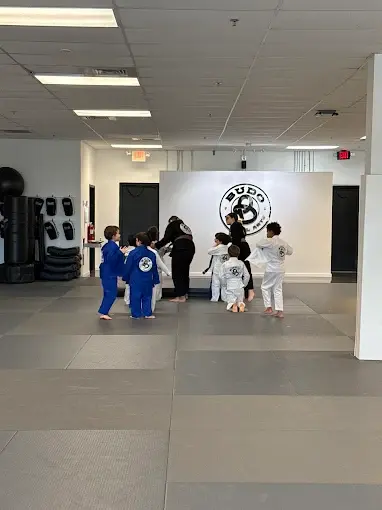
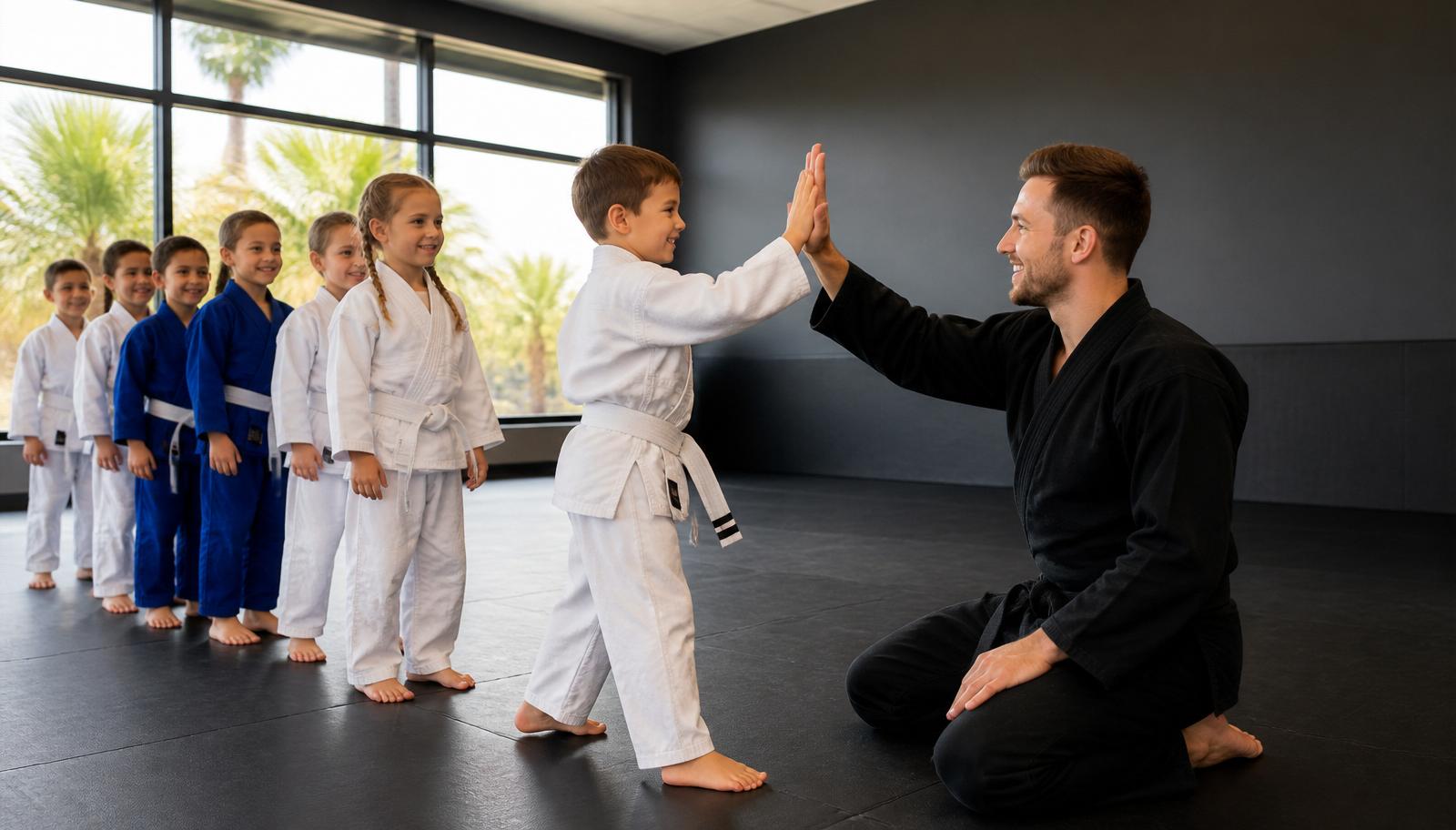
Budo's Tiny Ninjas program is designed for ages 3 to 4. Its page describes structured play, listening, body awareness, balance, and safe movement as preparation for later kids BJJ. That distinction matters: enrolling a preschooler does not mean asking them to perform the same partner techniques as an older child.
When comparing preschool programs, ask what happens during a real session. Movement games and brief instructions are easier to understand than a promise about future black belts. You want to know how the instructor introduces a new activity, handles a child who needs a break, and keeps movement organized. Watch the process instead of judging the class by how impressive the techniques look.
What to look for during a preschool visit
- Instructions the child can understand without a long explanation.
- A coach who redirects calmly and demonstrates the next step.
- Clear boundaries around space, movement, and touching other children.
- A chance to practice rather than pressure to perform perfectly.
- An explanation of how parents can support a nervous first visit.
3. Ages 5 to 7: introducing foundational grappling
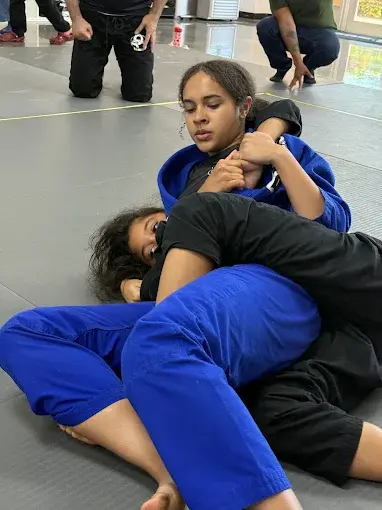
Lil Ninjas is Budo's foundational Brazilian Jiu Jitsu program for ages 5 to 7. The program page describes learning fundamental positions and escapes through coached practice. BJJ is a grappling discipline, so parents should expect to ask about close-contact partner work rather than imagine a class consisting only of solo movements.
The most useful first-class questions concern the introduction, not how quickly your child will earn a belt. Who explains the drill? How is a partner chosen? What happens if a child is unsure about the movement? How do students ask to stop? Those details help you understand whether the environment is a reasonable fit for your child today.
An example, not a Budo testimonial
Imagine a six-year-old who enjoys playground games but feels nervous about joining an unfamiliar group. Their parent explains that concern before the visit and asks how the coach introduces beginners. After class, the parent asks which activity felt comfortable and which felt confusing. The useful result is information about fit, not an instant transformation into a fearless child. This is a hypothetical situation, not a report about a particular student.
Your child's reaction may change once the setting becomes familiar. Equally, discomfort should not automatically be dismissed as something to push through. Discuss it with the coach and decide together whether another visit, a different introduction, or waiting is appropriate. The child's experience belongs in that decision.
4. Ages 8 to 12, and teens: beginners are still welcome
An older child does not need years of preschool classes before starting Brazilian Jiu Jitsu. Budo's Jr. Warriors program serves ages 8 to 12 and describes technique practice and coached live rolling. Rolling means practicing against a partner who provides resistance; ask the instructor how beginners are introduced and how that resistance is managed.
Do not treat an older beginner's size as proof they are ready for every activity. Experience, comfort, and the coaching structure still matter. A child can learn alongside peers without being expected to know what they know. Ask how instruction works when students have different levels of experience and what the school expects from a new student during the first visits.
- Ask how partners are matched for size and experience.
- Ask which movements beginners practice before more demanding drills.
- Find out how a child requests a pause or help.
- Clarify what success looks like during the introductory period.
Budo's teen and adult BJJ program begins at age 13. That age division is a starting point for a conversation with the school, not permission to assume every teenager belongs with any adult partner. Ask about appropriate placement and supervision for your teenager. There is no need to invent a deadline after which a child has missed the opportunity to learn.
5. Ask about safety without expecting a zero-risk promise
Brazilian Jiu Jitsu involves physical contact, and injuries are possible. An age-appropriate program and careful coaching do not make contact activity risk-free. Avoid choosing a school because its website simply says safe. Ask what the school actually does to manage the activities your child will participate in.
Questions worth asking directly
- Which techniques are permitted in this age group?
- How are stopping signals taught, and what happens when a student uses one?
- Who supervises partner drills and live practice?
- How does the school handle injury concerns and return to participation?
- What are the expectations for clean uniforms, hygiene, and illness?
A useful answer describes a procedure rather than a reassuring slogan. If you do not understand a technique or class activity, ask to have it explained in plain language. Parents do not need grappling experience to ask informed questions. For individual medical concerns, use a qualified healthcare professional rather than relying on a school's marketing or an article like this.
6. Make the first visit practical for your family
Budo is at 5901 Lyons Rd in Coconut Creek, Florida. Families considering classes from Coral Springs, Parkland, or Margate should check the trip at the time they would actually attend. A convenient-looking distance on a map may feel different after school pickup, work, and a sibling's activity. A workable routine matters more than winning an argument about the ideal starting age.
- Choose the program that matches your child's current age.
- Contact the school about a suitable first class and any participation concerns.
- Confirm what to bring, what to wear, and when to arrive.
- Leave enough time that the introduction is not rushed.
- Afterward, ask your child about one enjoyable moment and one confusing moment.
Budo currently advertises two weeks of classes for $29 with a free uniform. That is an introductory offer, not a statement of ongoing tuition or unlimited attendance. Before committing beyond the introduction, ask about the regular schedule, membership price, fees, and agreement terms. A trial should help your family evaluate the actual experience, not replace those conversations.
7. Frequently asked questions about starting kids BJJ
Can a three-year-old start Brazilian Jiu Jitsu?
At Budo, a three-year-old can explore Tiny Ninjas, a play-based foundation for ages 3 to 4. That is different from the foundational grappling taught in Lil Ninjas at ages 5 to 7. Ask about the class format rather than assuming all preschool programs called BJJ teach the same activities.
Is five the best age to start BJJ for every child?
No single birthday establishes the best starting point for every child. Five is the beginning of Budo's Lil Ninjas age group. Readiness, comfort with the setting, and the instruction available still matter. Use a discussion and an appropriate visit to evaluate fit instead of treating an age recommendation as a guarantee.
Is ten too late to begin?
No. A ten-year-old falls within Budo's Jr. Warriors age group, which serves ages 8 to 12. Prior preschool training is not a prerequisite for asking about a beginner class. Tell the school your child is new and ask how instruction and partner matching work for beginners.
Does a shy child need to become confident before joining?
Not necessarily. Explain the concern and ask how a new student is welcomed. Shyness alone does not tell you whether a specific class will fit. Avoid promising that training will remove anxiety or replace professional support. Notice how your child responds and discuss persistent discomfort rather than ignoring it.
Can parents train at the same school?
Yes. Budo offers teen and adult Brazilian Jiu Jitsu as well as its children's programs. Review the adult program and ask about suitable times. Having programs at one school does not mean parents and young children share the same class or that all family members can attend simultaneously.
New Student Experience
Ready to See It In Person?
2 Weeks of Classes — $99 $29
Training near you: martial arts near Parkland