Your child comes home and says someone kept grabbing their shirt during a game. Was it playful wrestling, an argument, or something more serious? You want to help without teaching your child that every uncomfortable moment should become a fight. Before choosing a response, slow the conversation down and find out what happened.
For parents looking into kids BJJ near Coral Springs, this is a useful place to start. Brazilian Jiu Jitsu is a grappling martial art, but enrolling in a class is not the first response to an unsafe school situation. Listening, clear boundaries, and help from responsible adults come first. Training can be a separate setting for practicing movement and partner control.
Budo Martial Arts teaches in neighboring Coconut Creek at 5901 Lyons Rd, not at a Coral Springs branch. This guide explains what parents can say today, what to ask a school or coach, and how to evaluate the role of supervised martial arts without expecting a child to solve adult-sized problems alone.
1. Find out when the game stopped being a game
Start with an open question: tell me what happened from the beginning. Listen before deciding whether the other child was being mean or your child should have reacted differently. Ask where it happened, who was nearby, and whether anyone tried to stop it. A calm conversation makes it easier to learn details that a quick lecture might miss.
A stop request changes the situation
Children may disagree about whether a game was fun. That does not make discomfort unimportant. If someone wants the contact to stop, the activity should stop; participation earlier is not permission to keep grabbing them afterward. Parents can reinforce that rule without needing to decide immediately whether the incident meets a formal definition of bullying.
- Did you want to play that way, or did it surprise you?
- Did you ask them to stop, and what happened next?
- Has this happened before with the same person?
- Which adult was nearby, and did you get help?
- Are you worried about returning to the same setting?
If a child describes threats, repeated targeting, injury, or fear about returning, contact the responsible adults rather than leaving the next step to the child. Seek medical attention when an injury needs it. You do not need a martial arts enrollment decision before asking a school, camp, or activity organizer to address unsafe behavior.
2. Give your child a simple plan, not a fighting assignment
StopBullying.gov recommends speaking calmly and clearly when it is safe to do so. If speaking up feels too difficult or unsafe, its advice is to walk away, avoid fighting back, and find an adult who can help stop the behavior. This is guidance for bullying situations, not a diagnosis of every disagreement during play.
Practice the words without practicing a confrontation
A short sentence can be easier to remember than a long speech. You might rehearse: stop, I do not want to play that way. Then discuss which teacher, coach, or other trusted adult your child can approach. This is a conversation exercise, not a promise that the words will always make another child cooperate.
- Use a clear stop request if it feels safe.
- Move away from the activity when you can do so safely.
- Find a trusted adult and describe what happened.
- Tell a parent if it continues, or if you are worried about returning.
Do not tell a child they failed because they froze, cried, or could not find the right words. Those reactions do not remove an adult's responsibility to help. Praise telling you what happened, then work with the school on a practical plan. If the situation continues, follow up instead of assuming one conversation resolved it.
3. Understand what kids BJJ can practice
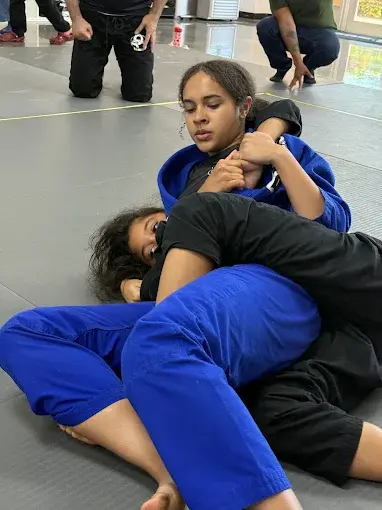
Brazilian Jiu Jitsu involves grappling: learning positions, movement, escapes, and control with a partner. Its central practice differs from exchanging punches and kicks. In a children's program, ask which activities are appropriate for the age group and how new students are introduced. An adult training video does not describe what a young child should be doing.
The boundary lesson matters as much as the movement
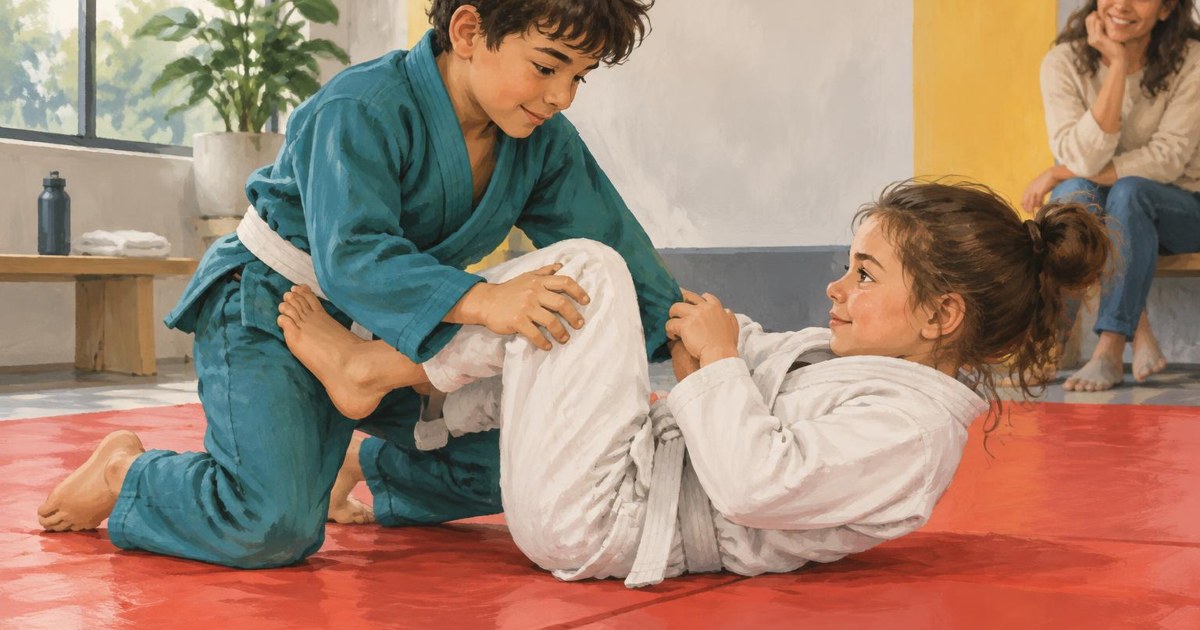
A supervised drill gives both students a defined task. One may practice a movement while the other provides the amount of resistance the coach requests. Both need to understand when to start and when to stop. That structure is different from grabbing a classmate unexpectedly or trying out a technique on a sibling.
- Follow the drill the instructor has assigned.
- Let a partner learn instead of trying to embarrass them.
- Stop immediately when a partner or coach signals a stop.
- Tell the coach when the pace or contact feels uncomfortable.
- Keep class techniques out of unsupervised games.
These are observable habits, not guaranteed protection from bullying. A child may learn to communicate more clearly during class and still need help in a stressful situation elsewhere. No belt or technique transfers responsibility for school safety from adults to children. Treat training as instruction and practice, not an insurance policy against conflict.
4. Watch how a coach handles a boundary
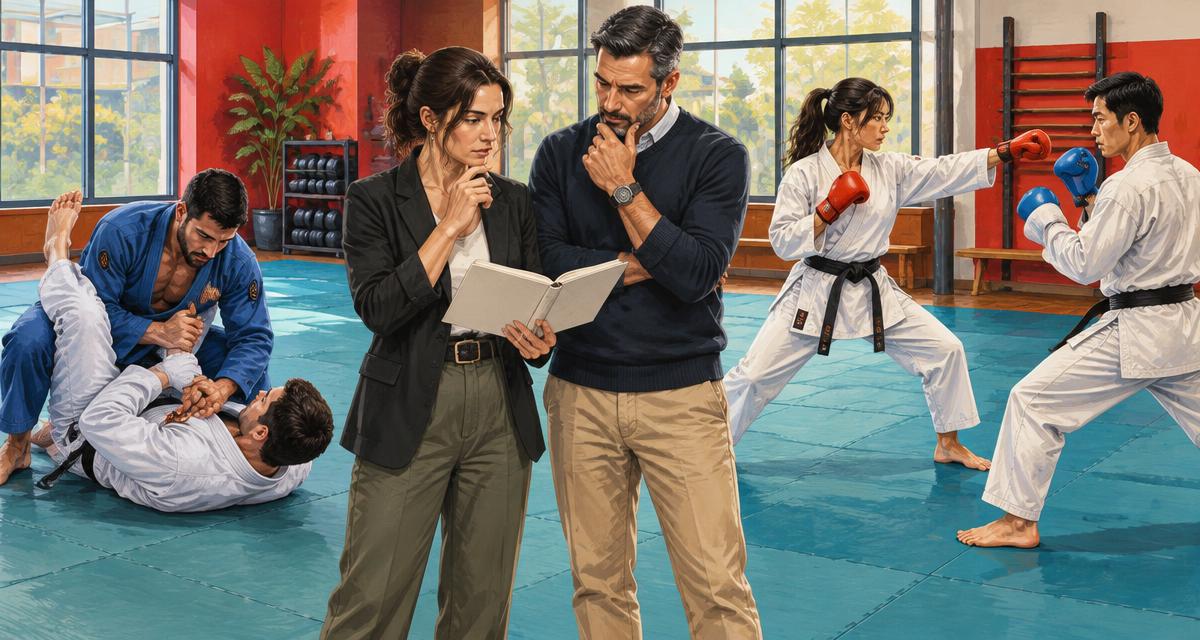
When you observe kids martial arts near Coral Springs, look beyond the most impressive demonstration. Watch what happens when a student is confused, uncomfortable, or moving too quickly. Does the coach notice and intervene? Does the partner slow down? Those moments tell you something useful about the real learning environment.
An illustrative example, not a student testimonial
Imagine an eight-year-old who enjoys wrestling until the other child begins pulling too hard. In a supervised drill, a helpful next step would be stopping, telling the coach, and restarting only after the instruction and pace are clear. The accomplishment is communicating a limit and respecting it. This hypothetical example is not a report about a particular Budo student.
Ask the instructor what would happen in that situation during the class you are considering. A concrete answer is more useful than saying that everyone is friendly. You want to know who supervises, how a concern is reported, and how a child can ask for a different partner when necessary.
- How are students matched by size, experience, and readiness?
- What contact and techniques are permitted in this age group?
- How do students signal a stop, including verbally?
- What happens if a partner ignores that signal?
- How are parents told about an injury or concerning interaction?
The American Academy of Pediatrics' HealthyChildren parent guidance describes martial arts as activities with differing injury risks and emphasizes safety considerations. Grappling is physical contact, not risk-free exercise. Ask about supervision and age-appropriate practice, and discuss relevant health restrictions with your child's healthcare professional and the instructor.
5. Keep home play and martial arts practice separate
A child who is excited about a new skill may want to demonstrate it everywhere. Set the boundary before that happens: learning at the academy does not mean practicing holds on friends, pets, or family members. Watching a technique online is not a substitute for qualified supervision either. Ask the instructor what, if anything, is appropriate to practice outside class.
Notice cooperation, not just winning
After class, ask what made you a good partner today. Listen for something specific, such as slowing down, taking turns, or telling the coach when a drill was confusing. Those answers make it possible to discuss progress without asking whether your child could beat another child. The goal of the car ride home is understanding, not a performance review.
Families in Coral Springs also need a routine that works outside the classroom. Confirm Budo's current timetable and test the drive to Coconut Creek at your normal pickup hour. Sample Rd or Wiles Rd toward Lyons Rd may be part of your route, depending on where you start. Use live directions rather than a universal travel-time promise.
6. Questions parents ask about rough play and BJJ
Should my child use BJJ when someone grabs them at school?
Do not give a blanket instruction to fight or apply a technique. Discuss safe ways to leave the situation and get adult help, and work with the school if grabbing continues. A martial arts instructor can explain the boundaries of training, but cannot guarantee a response for every real-world encounter.
Is a child who likes wrestling automatically ready for BJJ?
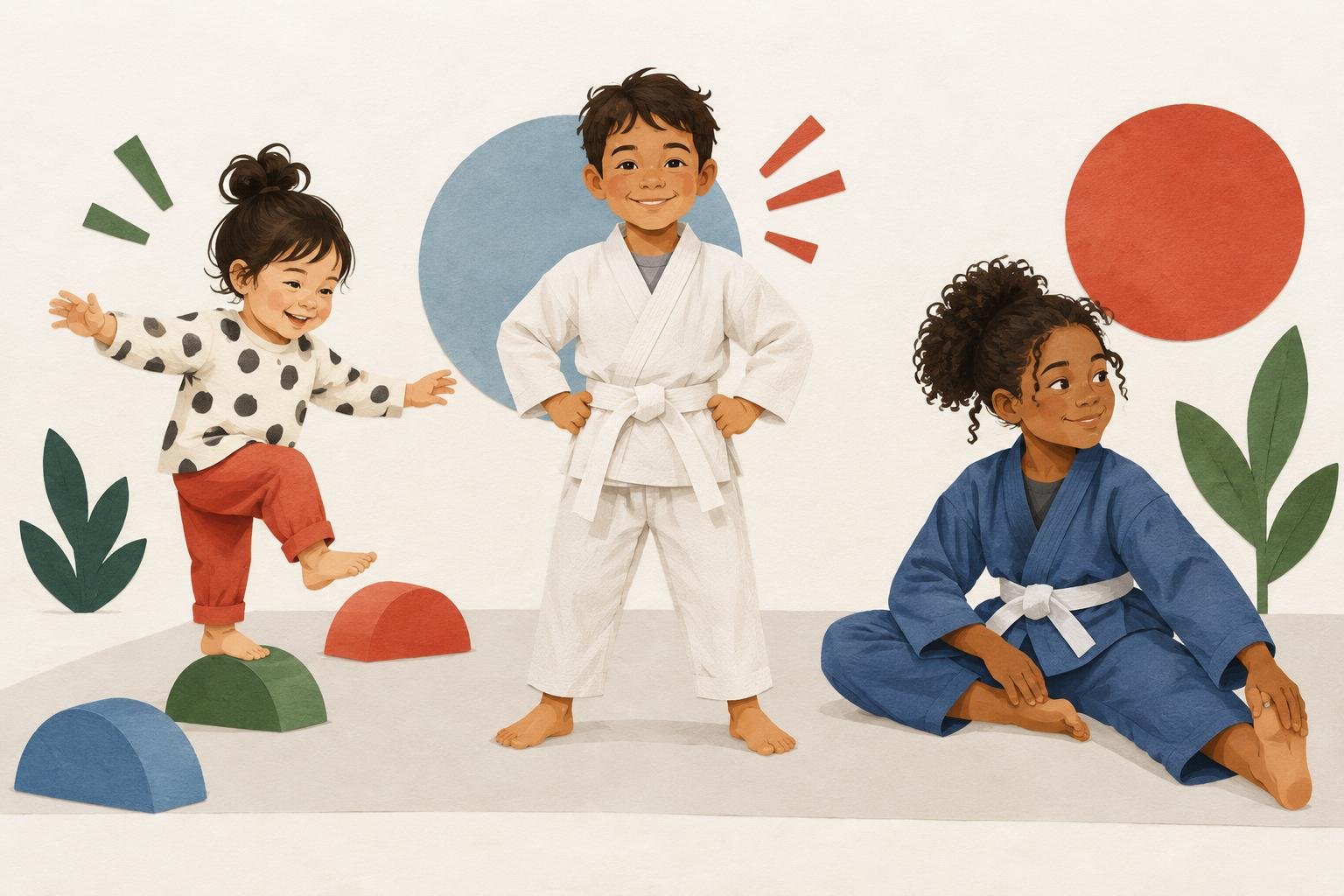
No. Enjoying physical play is only one clue. Listening, taking turns, comfort with contact, and responding to a stop request also matter. Budo offers Tiny Ninjas for ages 3 to 4 as an introduction to movement and routines, rather than treating preschool classes as adult grappling instruction.
What if my child dislikes being touched?
Talk with the instructor before the first visit. Ask what an introduction could realistically look like, without assuming an accommodation or pushing a child through distress. Another activity may be a better fit. Choosing differently is not a failure, and martial arts should not replace professional support for a health or developmental concern.
How do we try kids martial arts near Coral Springs?
Budo's introduction is two weeks of classes for $29 with a free uniform. Ask which classes fit your child's age and how to arrange the first visit at the Coconut Creek academy. Confirm ongoing membership costs and terms separately. Use the trial to observe coaching, boundaries, and your child's response, not to expect an instant transformation.
Start with a conversation, then a supervised first step
You do not need to turn your child into a fighter to take their discomfort seriously. Listen, help them identify trusted adults, and insist that unwanted contact is addressed. If your family also wants to explore BJJ, look for instruction that makes partner responsibility visible. Respecting a stop is a skill worth practicing, on the mat and beyond it.
References for parents
New Student Experience
Ready to See It In Person?
2 Weeks of Classes — $99 $29
Training near you: martial arts near Coral Springs