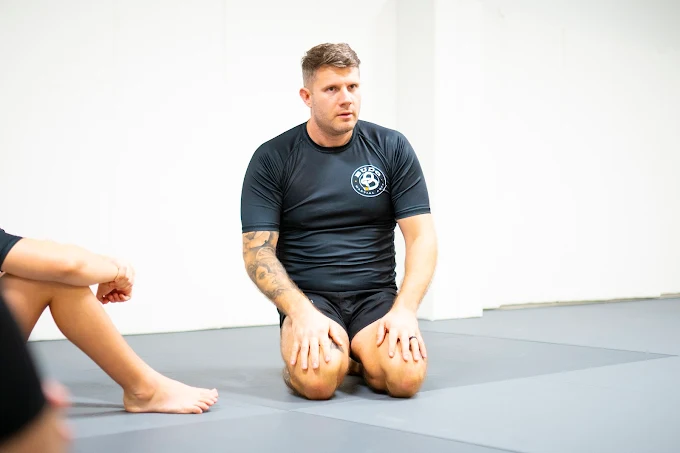
Most people walk into their first Muay Thai class expecting to get hit. What usually happens is quieter. You learn where to put your feet, how to keep your hands up, and how to throw a kick without falling over. The hard part is not toughness. It is coordination, breathing, and patience with yourself.
This guide is for teens and adults who are curious about Muay Thai classes in Coconut Creek and want a realistic picture before they show up. It covers what the sport trains, how a beginner class often runs, gym etiquette, gear, questions worth asking, and how to judge whether a gym is the right fit. Budo Martial Arts is at 5901 Lyons Road in Coconut Creek, and our Muay Thai program is for ages 13 and up, so that is the audience we have in mind here.
What Muay Thai actually trains
Muay Thai is a striking art from Thailand, often called the art of eight limbs because it uses punches, kicks, knees, and elbows. It also includes the clinch, where two people tie up at close range and work for position. That combination is what separates it from boxing, which uses only the hands, and from many kickboxing styles that limit knees, elbows, or clinch work.
For a beginner, that list can sound like a lot. In practice, early classes usually narrow it down. You spend most of your time on stance, guard, a few basic punches, the round kick, and the teep (a straight push kick). Knees and elbows tend to come in gradually, and clinch work often comes later still. If a gym throws everything at you on day one, ask why.
How a beginner Muay Thai class often works
Every gym runs class a little differently, so treat this as a general picture rather than a description of any one schedule. Ask the gym how its own beginner class is structured. A common outline looks something like this:
- A warmup to raise your heart rate and loosen your hips and shoulders. This might include skipping rope, light movement, or shadowboxing.
- Stance and footwork. How to stand, how to step without crossing your feet, and how to keep your guard up while you move.
- Technique for the day. A coach demonstrates one or two strikes or a short combination, then breaks it into pieces.
- Partner or pad work. You take turns striking pads or a kick shield held by a partner, then switch and hold for them.
- Conditioning or bag rounds, depending on the class.
- A cooldown and a short review before you leave.
Rounds are usually timed. A buzzer or timer marks work and rest, which helps you pace yourself. Your first few rounds may feel longer than they look. That is normal, and a good coach will expect beginners to slow down or take a short break.
Holding pads is a skill too
New students often think holding pads is the easy half. It is not. You have to angle the pad correctly, brace for impact, and give your partner a target at the right height. Poor pad holding can hurt both people. Expect a coach to show you how to hold, not just how to hit, and ask for help if you are unsure. Learning to hold well is part of being a good training partner.
Sparring: what beginners should know
Sparring is the part people worry about most. In many gyms it is a separate step that comes well after you have learned to defend yourself and control your power. At Budo, our Muay Thai page says new students do not spar on day one and that sparring is optional, so you can train for skill and fitness without ever stepping into it.
Wherever you train, ask how sparring is introduced, how partners are matched, and how intensity is controlled. Light technical sparring and hard sparring are very different experiences. You should always be able to say no, slow down, or stop a round without anyone making a big deal of it.
Gym etiquette for your first few weeks
Muay Thai culture varies from gym to gym, but a few habits are close to universal. Following them makes you an easy person to train with:
- Arrive a few minutes early and introduce yourself to the coach. Mention any injuries or limits before class starts.
- Keep your gear and clothes clean. Wash wraps and shirts after every session and let gloves dry out between classes.
- Trim your fingernails and toenails, and take off rings, watches, and other jewelry.
- Follow the gym's rule on shoes and mat areas. Many gyms ask you to train barefoot on the mat and keep shoes off it.
- Control your power with partners. Hitting pads hard is fine when your partner is ready. Hitting a person hard in a drill is not.
- Listen when the coach is talking and stop when the timer stops.
- Thank your partners. A quick fist bump or handshake at the end of a round goes a long way.
One more unwritten rule: do not coach other beginners. If you see something, mention it to the coach. Everyone is learning at a different pace, and advice from another new student can create confusion.
What to ask about gear before you buy anything
Muay Thai uses more gear than many martial arts. Over time, students commonly train with boxing gloves, hand wraps, shin guards, and a mouthguard. That does not mean you should buy all of it before your first class.
Ask the school what gear is provided for your intro before buying anything. Then ask:
- What should I wear the first day? Most people start in athletic shorts and a T-shirt.
- Do I need hand wraps, and will someone show me how to put them on?
- When will I need shin guards or a mouthguard, and what kind does the gym recommend?
- Is there anything I should not buy yet because it will not fit the way the gym trains?
Buying gear after a few classes usually works better. By then you know what drills you will do and what fits.
For teens and their parents
Our Muay Thai program starts at age 13. If you are a parent of a teen who wants to try it, the questions are a little different. Ask how teens are paired in partner drills, whether they ever work with adults, and how contact is supervised. Ask what the coach expects from a teen in terms of focus and behavior, and what happens if a teen is struggling.
It is also fair to ask whether you can watch a class first. Seeing the coaching style, the noise level, and how partners treat each other will tell you more than any description. If your teen also has an interest in grappling, Budo teaches Brazilian Jiu Jitsu for the same age range.
How to tell if a gym is a good fit
A good Muay Thai gym for a beginner is not always the one with the most fighters on the wall. Watch for how the room treats new people. A few signs worth noticing during a visit or first class:
- Coaches walk around and correct technique during drills, not only from the front of the room.
- Corrections are specific and short, like turning the hip or bringing the hand back to the face.
- Experienced students hold pads patiently for beginners instead of showing off.
- Intensity is adjusted to the person, especially for newcomers.
- Nobody makes you feel rushed into sparring, competition, or extra classes.
- You can ask questions without feeling like a burden.
You might also notice whether the class matches what you want. Some people want a workout with real technique. Others want to compete eventually. Many want something in between. Tell the coach what you are after and listen to how they respond.
Questions to ask the coach
- What does a beginner do in the first week?
- How do you introduce knees, elbows, and clinch work?
- How is sparring handled, and is it ever required?
- How do you pair partners by size and experience?
- What should I do if I have an old injury or a limitation?
- How often should a beginner plan to train to build a routine?
- Can I try Brazilian Jiu Jitsu as well, or is that separate?
If you have a medical condition, or you are returning to exercise after a long break, it makes sense to check with your doctor before starting any demanding training. Then share anything relevant with the coach so they can adjust drills.
Price and commitment questions
Budo currently offers a $29 intro for two weeks of Muay Thai classes. Beyond the intro, ask the school directly rather than guessing. Useful questions include what the intro includes, what options are available after it ends, whether there is a contract or agreement and how long it runs, how canceling or pausing works, and whether there are added costs later for gear or testing. Ask for anything important in writing before you sign.
Fitting Muay Thai into your week
Muay Thai skills build with repetition. A class you can make regularly will usually teach you more than a perfect schedule you keep missing. Before committing, check the drive to 5901 Lyons Road at the time you would actually leave work, school, or home. Traffic around Coconut Creek can look very different at different times of day, so use live directions on a real class day instead of a general estimate.
Plan for a little recovery, too. Your shins, hips, and shoulders may feel the first week. Sleep, water, and an easy day between sessions help. If something hurts in a sharp or unusual way, tell the coach and get it checked.
After your first class
Take a few minutes afterward to think about how it went. Did the coach notice you? Did you leave knowing one or two things to work on? Did your partners make the class easier? Were you comfortable asking questions? If the answers are mostly yes, a second and third class will tell you much more. Your first session is usually the hardest one to read, because everything is new.
If something felt off, say so. A good gym would rather hear it early than lose you quietly.
Quick checklist before your first Muay Thai class
- Confirm the class time, the program age (13 and up at Budo), and what the intro includes.
- Ask what gear is provided and what to wear.
- Trim nails, remove jewelry, and bring water.
- Arrive early and tell the coach about any injuries.
- Expect stance, guard, and basic strikes before anything advanced.
- Ask how sparring is handled, and know you can decline.
- Check the drive at your real departure time.
- Reflect after class and plan your next visit.
New Student Experience
Ready to See It In Person?
2 Weeks of Classes: $99 $29
Training near you: martial arts near Coconut Creek
Keep Reading
Adult BJJ
Starting Adult BJJ Near Coral Springs: A Practical First-Class Guide
Parent Guide
How to Choose a Kids Martial Arts Class Near Coral Springs
School Owner Perspectives
BJJ vs. Traditional Martial Arts Schools: The Media Changed. Did Your Business?
Parenting